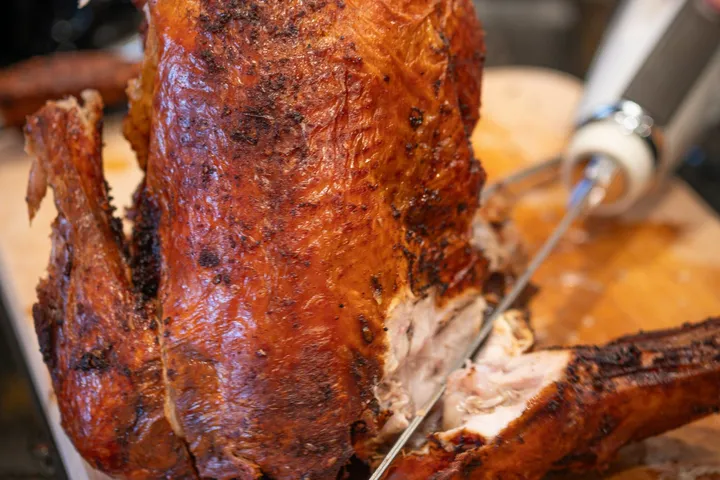
Spatchcock turkey on a pellet grill
Cook the flattened bird at 300°F on cherry and hickory pellets; a 13 lb turkey takes about 2 hours. Pull when the breast reads 162°F and the thigh 175°F, then rest it 20 minutes.
- Grill
- 300°F
- Pull at
- Time
- 2¾ hr
A whole chicken on a pellet grill takes about 75 minutes at 350°F on pecan for a 4.5 lb bird. Pull at 160°F breast and 175°F thigh, or spatchcock it for speed.
Each recipe gives the pellets, grill temperature, pull temperature and time first. Pull temperatures meet USDA minimums or the doneness barbecue cooks aim for, whichever is higher. Our own cook photos are being added page by page; current photos are credited stock.
Cook a 4 to 5 lb chicken at 350°F on pecan pellets for 70 to 85 minutes, or 50 to 60 minutes spatchcocked. Pull when the breast reads 160°F and the thigh at least 175°F, then rest it 15 minutes.
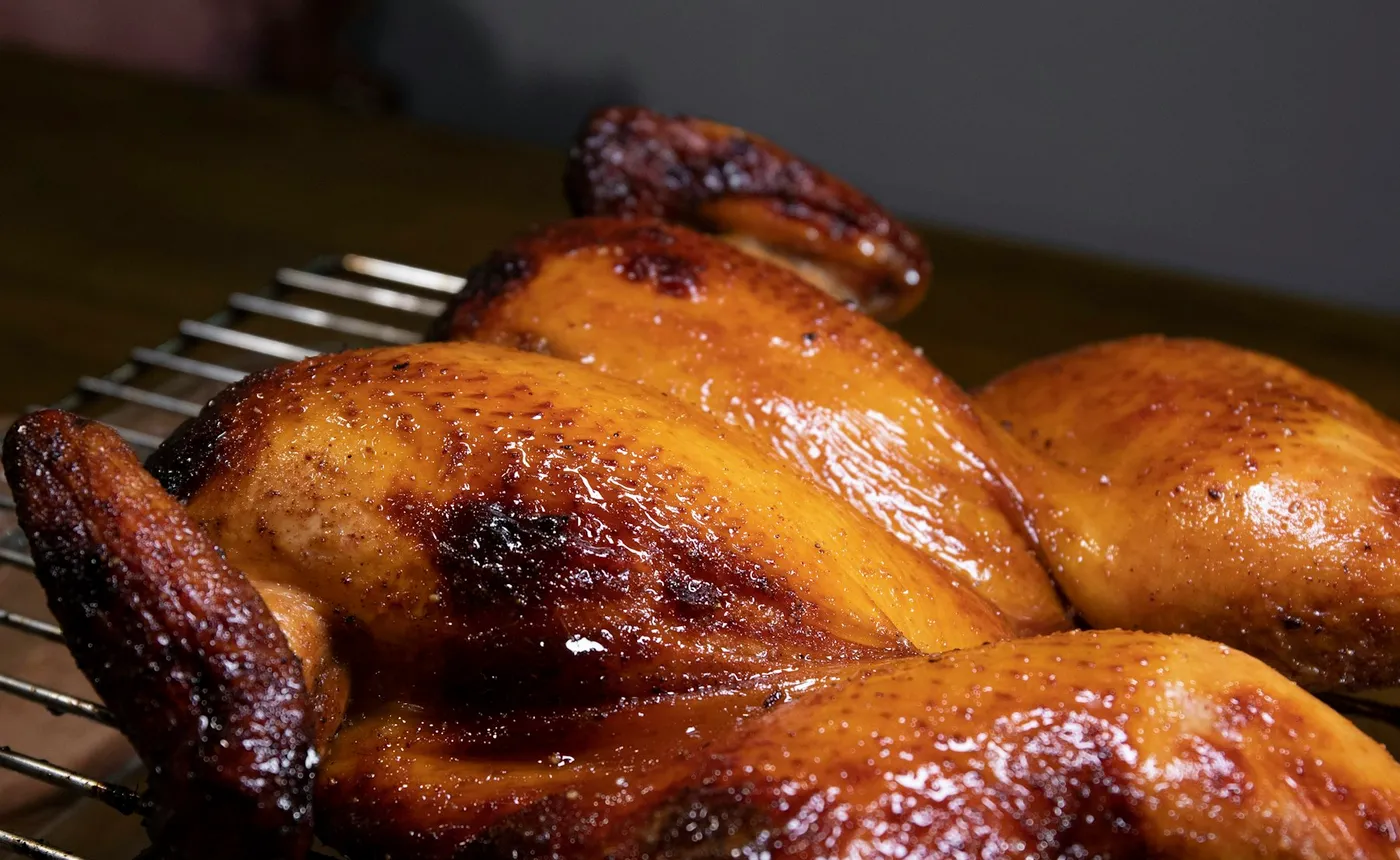
Pull a 4.5 lb whole chicken off the pellet grill when the breast reads 160°F and the thigh 175°F, which at 350°F on pecan pellets takes about 75 minutes. Spatchcocked, the same bird is done in 50 to 60 minutes with the breast and thighs finishing together.
This recipe is written for a Z Grills, and of the poultry recipes on this site it’s the one worth putting in the weekly rotation, because it’s cheap, it takes about an hour and a half from cold grill to cutting board, and one bird covers dinner plus two lunches. Dry brine the night before, set the grill to 350°F, and leave the lid closed.
Plenty of people smoke whole chickens at 225°F for three hours, on the theory that a smoker should be run low. The meat is good. The skin is a soft grey coat that comes off in one piece, and everyone at the table peels it off. Moving to 350°F fixes that on the first try, and you lose surprisingly little smoke for it.
A 4 to 5 lb bird feeds four and cooks evenly. Under 3.5 lb the breast tends to dry before the thighs are done. Over 5.5 lb it starts acting like a small turkey, and I’d spatchcock it.
Air-chilled chicken, if your store carries it, has less water in the skin and browns noticeably better than the usual water-chilled birds. Pick one without tears in the breast skin, since exposed breast meat dries out fast at 350°F. Skip anything labeled “enhanced” or “contains up to 10 percent solution”, because it’s already been injected with salt water, doesn’t need the brine, and takes smoke poorly.
Organic and pasture-raised birds tend to be smaller and leaner with firmer meat. They cook the same way, so use the same method and start checking a little sooner.
| If you want | Cook it | Time at 350°F |
|---|---|---|
| The best-looking bird on the table | Whole, legs tied | 70 to 85 minutes |
| Breast and thighs done together | Spatchcocked | 50 to 60 minutes |
| Two birds for leftovers | Two whole birds side by side | 80 to 95 minutes |
| More smoke flavor | Whole, 30 minutes at 250°F first | Add about 20 minutes |
| Bird | Grill temp | Approximate time | Pull at |
|---|---|---|---|
| Whole, 3.5 to 4 lb | 350°F | 60 to 70 min | 160°F breast, 175°F thigh |
| Whole, 4 to 5 lb | 350°F | 70 to 85 min | 160°F breast, 175°F thigh |
| Whole, 5 to 6 lb | 350°F | 85 to 100 min | 160°F breast, 175°F thigh |
| Spatchcocked, 4 to 5 lb | 350°F | 50 to 60 min | 160°F breast, 175°F thigh |
| Whole, 4 to 5 lb | 300°F | 90 to 105 min | 160°F breast, 175°F thigh |
| Two whole birds, 4 to 5 lb each | 350°F | 80 to 95 min | 160°F breast, 175°F thigh |
Figure 15 to 18 minutes a pound at 350°F for a bird that went on cold from the fridge, on a grill holding temperature at the grate on a day above 40°F. A second bird on the grate adds about 10 minutes rather than doubling the time. The smoke time calculator gives a starting estimate for other weights, and the breast probe gives you the real answer.
Pat the chicken dry inside and out. Mix a tablespoon of kosher salt with a teaspoon of baking powder (powder, not soda, which leaves a soapy taste) and rub it over every surface, pushing some under the breast skin. The salt seasons the meat overnight. The baking powder nudges the skin’s pH up a little, which helps it brown and pulls moisture to the surface where the grill’s fan carries it off.
Set the bird on a rack over a sheet pan and leave it uncovered in the fridge for 12 to 24 hours. The next day the skin looks dry, tight and slightly translucent. Don’t rinse it.
Work half the soft butter under the breast skin, spread the rest on the outside, and season with pepper, paprika, garlic powder and thyme, with no more salt. The lemon half and garlic cloves go in the cavity for aroma. Tie the legs together with kitchen twine so the thighs stay tight to the body, and tuck the wing tips behind the shoulders.
If you forgot the overnight step, salting and leaving it uncovered in the fridge for two hours still helps. One hour is the least I’d give it.
Pit tip: A cheap wire cooling rack over a rimmed sheet pan does more for crisp chicken skin than any rub. Air has to reach the underside of the bird overnight, or the bottom stays damp and the back skin never browns.
Set the bird breast down. Cut along both sides of the backbone with poultry shears, lift it out, flip the chicken and press firmly on the breastbone until it cracks and lies flat. Brine and season it the same way. It goes on the grate skin up and cooks in 50 to 60 minutes at 350°F with the thighs and breast finishing within minutes of each other. The whole bird looks better on a platter, and the flat one cooks better, so let the guest list decide. The same technique scaled up works for a spatchcock turkey.
Pecan in the hopper. Chicken takes smoke quickly, and 75 minutes on straight hickory can taste like a campfire. Pecan is a mild relative of hickory with a sweet, nutty smoke that suits poultry. Apple and cherry also work and color the skin well; half pecan, half cherry is my second choice.
Set 350°F and give the grill 15 minutes after it says it’s ready. The chicken goes on breast side up, straight on the grate, with the legs toward the hot end. Most pellet grills have one end that runs hotter than the other, and the thighs can use the extra. Push a leave-in probe into the thickest part of the breast from the side, angled down and clear of the bone, and a second probe into a thigh if you have one.
Close the lid for 45 minutes. Each look costs about 30°F and five minutes of recovery.
The temperature is about the skin. Chicken skin is water and collagen over a thin layer of fat, and below roughly 300°F the fat never renders and the water can’t escape fast enough, so you get a soft, rubbery skin. At 350°F the fat melts out, the moisture leaves, and the skin tightens and browns. The bird also cooks through in 75 minutes instead of three hours, so the breast is still moist when the thighs are done. You do give up some smoke flavor at 350°F. To get more, run the first 30 minutes at 250°F, turn it up, and add 20 minutes to the plan.
At 45 minutes, turn the bird 180 degrees so the breast end faces the hot side, and read the probe. A 4.5 lb bird is usually at 130 to 140°F in the breast. If the breast skin is dark and the thighs look pale, lay a sheet of foil loosely over the breast and close the lid.
The most common pulling mistake is trusting the breast probe alone. It reads 160°F, the bird comes off, and the thigh meat next to the bone is pink and reading 158°F. Cutting the legs off and giving them 15 more minutes on the grill while the breast goes to the table rescues it, but checking the thigh before anything leaves the grate means you never need the rescue.
| If you see | Do this |
|---|---|
| Breast at 160°F, thigh under 170°F | Carve the legs off and give them 10 to 15 more minutes |
| Breast skin dark at 45 minutes | Loose foil over the breast, turn the bird |
| Skin pale and soft near the end | Grill is running cold; raise it 25°F for the last 15 minutes |
| Bottom skin scorching | Bird is over the fire pot; move it toward the cool end |
Pull the chicken when the breast reads 160°F in the thickest part and the thigh reads at least 175°F next to the bone. The breast carries over to 165°F while it rests, which is the USDA number and still juicy. The thigh at 175°F has had time for the connective tissue around the bone to soften; 180°F is better and still moist, because dark meat has the fat to handle it.
Rest the whole bird under loose foil for 15 minutes, or 10 if it was spatchcocked. Loose foil keeps the skin from steaming soft.
To carve, cut through the skin between thigh and body, bend the leg out until the joint pops, and cut through. Split each leg into thigh and drumstick. Run a knife down one side of the breastbone, lift the lobe off the ribs in one piece, and slice it across the grain. Do the other side, then take the wings off last.
A 350°F cook in cold weather is where a pellet grill shows its limits. On a 30°F day with wind, the fan pulls cold air through the fire pot, the controller feeds hard, and the grate may only hold 320 to 330°F. The skin takes 10 to 15 minutes longer to crisp and the cook burns about half again as many pellets as it would in summer. Set the controller to 375°F, put the hopper side downwind, give the grill 20 to 25 minutes to settle, and watch skin color more than the display.
Above 85°F the grill coasts, and the skin over the fire pot can scorch before the thighs are done. Move the bird toward the cooler end for the last 20 minutes.
Most barrel pellet grills have a hot end, often over the fire pot or toward the chimney. A whole chicken is small enough to sit on one side, so put the legs toward the heat and turn it once. An oven thermometer at each end for one cook maps your grill for good.
A 4.5 lb chicken serves four with sides, or two with a lot left over. Smoked mac and cheese fits on the upper rack for the whole cook, but at 350°F it browns faster than it does at 250°F, so cover it for the first half hour. The drippings fall to the grease tray and are lost, which is the one argument for cooking the bird in a pan. I take the crisper skin.
Leftovers keep three to four days in the fridge. Pull the meat off the bones the same night and it goes into tacos, soup, sandwiches and chicken salad through the week. The carcass makes a stock with a light smoke to it. Reheat pieces on a rack in a 400°F oven for 10 minutes to bring the skin back, because the microwave turns it rubbery in about a minute.
Pecan on its own is my chicken wood, mild enough for a 75 minute cook and sweet enough to suit the bird. Mix in cherry if you want a darker skin. The best pellets for smoking guide covers brands, blends and which bags are mostly oak filler.
A leave-in probe in the breast and a second in the thigh lets you leave the lid alone for 45 minutes, and an instant-read on the other thigh settles it before you carve. The ones I’d buy are in best wireless meat thermometers.
thepelletpit.com/recipes/whole-chicken/
Salt it the night before
Pat the chicken dry. Mix the salt and baking powder, rub it over the whole bird and under the breast skin, and leave it uncovered on a rack over a sheet pan in the fridge overnight.
Butter, season and tie
Don't rinse. Push half the butter under the breast skin, rub the rest on the outside and season with pepper, paprika, garlic powder and thyme. Put the lemon and garlic in the cavity and tie the legs together.
Preheat to 350°F
Fill the hopper with pecan pellets, set 350°F and let the grill hold for 15 minutes after it says it's ready.
On the grate
Set the chicken breast side up straight on the grate with the legs toward the hot end. Probe the thickest part of the breast from the side and a thigh if you have a second probe, then close the lid for 45 minutes.
Turn and check
At 45 minutes, turn the bird 180 degrees. The breast usually reads 130 to 140°F here; lay loose foil over it if the skin is browning ahead of the legs.
Pull on both numbers
Pull when the breast reads 160°F and the thigh at least 175°F, usually 70 to 85 minutes in. The breast carries over to 165°F.
Rest and carve
Rest 15 minutes under loose foil. Take off the legs, then lift each breast lobe off the bone and slice it across the grain.
About 15 to 18 minutes per pound at 350°F, so a 4.5 lb bird takes 70 to 85 minutes. Pull when the breast reads 160°F and the thigh 175°F. Spatchcocked, the same bird is done in 50 to 60 minutes.
350°F. Chicken skin needs heat above roughly 300°F to render and crisp, and at 350°F the bird cooks through before the breast dries. At 225°F a whole chicken takes about 3 hours and the skin comes off rubbery.
If you want the fastest, most even cook, yes. With the backbone out and the bird pressed flat, the thighs and breast finish together in under an hour at 350°F. A whole bird takes 15 to 25 minutes longer and looks better on the table.
It works, but the beer doesn't do much. It never gets hot enough to steam the meat, and the can shields the inside of the thighs so they lag the breast. Standing the bird up does crisp the skin all the way around; a vertical roaster rack does the same job with no can involved.
Cook the flattened bird at 300°F on cherry and hickory pellets; a 13 lb turkey takes about 2 hours. Pull when the breast reads 162°F and the thigh 175°F, then rest it 20 minutes.
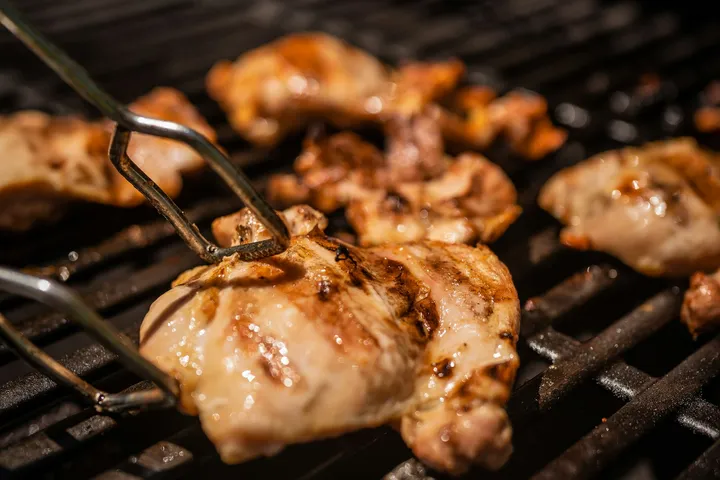
Smoke bone-in thighs at 275°F on hickory and apple pellets for 45 minutes, then turn the grill to 400°F for 15 to 20 minutes, about 70 minutes in all. Pull at 175°F to 180°F next to the bone.
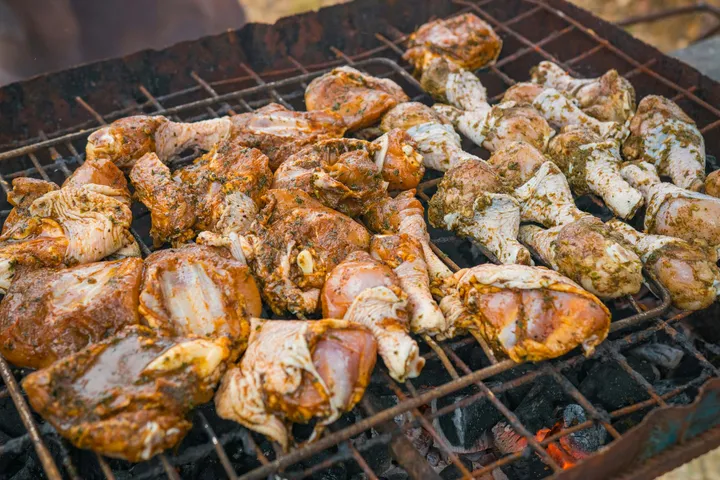
Smoke drumsticks at 275°F on hickory pellets for 45 minutes, then turn the grill to 400°F for 15 to 20 minutes, about 70 minutes in all. Pull at 180°F next to the bone.
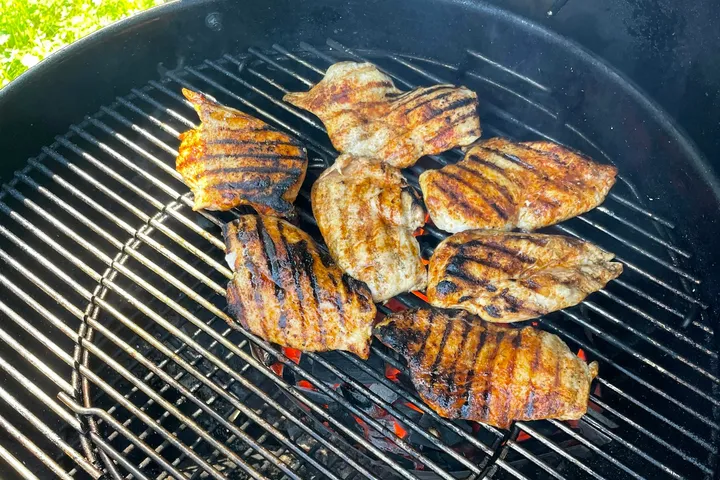
Brine the breasts for 45 minutes, then smoke them at 250°F on apple pellets for 50 to 70 minutes, about 2 hours start to finish. Pull each one at 160°F and rest it 5 to 10 minutes to reach 165°F.