From a cold grill to sliced pork, a tenderloin on a pellet grill takes under two hours. A 1.25 lb tenderloin needs about 75 minutes at 225°F, comes off at 140°F, and reaches 145°F during a 10 minute rest. If you want a browned crust, take it off the smoke at 135°F and sear it at 450°F for 2 minutes a side.
This recipe is written for a recteq with straight apple pellets and a typical twin pack of 1.2 to 1.3 lb tenderloins. Put them on at 5:15 and they’re usually off the grill by about 6:30. It’s my Tuesday-night pick from the pork recipes here: inexpensive, quick, and more forgiving than its reputation as long as it stops at 145°F.
Where tenderloin goes wrong is the target temperature. For decades the standard advice was 160°F, and at 160°F a tenderloin is a grey, dry stick. At 145°F the center is pink and wet, and that’s the USDA guideline for whole cuts of pork.
Buying pork tenderloin
A tenderloin is the slim, tapered muscle that runs along the inside of the backbone, 10 to 12 inches long and 1 to 1.5 lb. They’re usually sold two to a vacuum pack. Don’t confuse it with pork loin, the 3 to 5 lb roast that chops come from, which needs about three hours and has its own recipe.
Choose tenderloins that are pale pink, firm, and an even thickness for most of their length. Every one tapers to a tail at one end, and a shorter tail is easier to manage. Skip the pre-marinated ones and anything “enhanced with up to 12 percent solution”, which are pumped with salt water and come out spongy.
One tenderloin feeds two or three people, and two feed about five. Cook the whole pack even if you only need one, because cold sliced tenderloin makes better sandwich meat than anything at the deli counter.
Tenderloin cooking times at 225°F and 275°F
| Tenderloin |
Grill temp |
Time |
Pull at |
| 1 lb |
225°F |
60 to 70 minutes |
140°F, rest to 145°F |
| 1.25 lb |
225°F |
70 to 80 minutes |
140°F, rest to 145°F |
| 1.5 lb |
225°F |
80 to 95 minutes |
140°F, rest to 145°F |
| 1.25 lb, bacon wrapped |
225°F |
90 to 105 minutes |
140°F, rest to 145°F |
| 1.25 lb, smoked then seared |
225°F then 450°F |
60 minutes plus 4 minutes |
135°F, sear to 140°F |
| 1.25 lb |
275°F |
45 to 55 minutes |
140°F, rest to 145°F |
Those times are for grate temperature on a day above 50°F. Because tenderloin cooks by thickness rather than weight, two of them finish together, the same as one. The smoke time calculator gives a starting figure for other grill settings.
If dinner is in an hour, 275°F works fine. You lose some smoke flavor and get a narrower window at the end, so check the probe every 5 minutes once it passes 120°F.
Prep: silverskin, tail and a light rub
Remove the silverskin first. It’s the shiny membrane along one side, and it never softens on the grill. Slide a thin knife under one end, tilt the blade up slightly, and run it down the length while holding the membrane taut with your other hand. Left on, it puts a chewy band across every slice.
Next, deal with the tail. Either trim it off and cook it separately or fold it under and tie it with a loop of twine so the whole tenderloin is one thickness. Otherwise the tail reaches 160°F while the middle is still at 140°F.
Coat each tenderloin with a little olive oil, then season with salt, pepper, brown sugar, paprika, garlic powder and a little ground cumin, about 1 tablespoon of rub apiece. Thirty minutes on the counter is enough, and seasoning overnight doesn’t change much on a cut this thin.
Brining is optional. Two hours in a quart of water with 3 tablespoons of salt and 2 tablespoons of sugar is plenty, and longer starts to make it taste like ham. I usually skip it, since a tenderloin pulled at 140°F doesn’t need the help.
Smoking the tenderloin, then the optional sear
Straight apple is my pellet for tenderloin. It’s on the grill for about an hour, which isn’t long enough for a heavy wood to mellow, and the meat itself is mild. Apple gives a light, sweet smoke and a golden surface. Cherry is equally good, and hickory works if you cut it with apple. Mesquite overwhelms a cut this delicate.
Set the recteq to 225°F and give it 10 minutes after it reports ready. recteq controllers tend to hold close to the set number, but the grate still needs a few minutes to settle. Lay the tenderloins in the center of the grate with the probe in the thickest part of the larger one, and close the lid.
There’s nothing to spritz, wrap or flip. Look at the probe at 45 minutes, and once it passes 120°F, check every 10 minutes, because the last 20 degrees move quickly on something this thin.
Skipping the tie is the usual first-tenderloin mistake. Pull when the middle hits 140°F and the last 3 inches can already be near 158°F and dry. With the tail folded under and tied, both ends finish within a few degrees of each other.
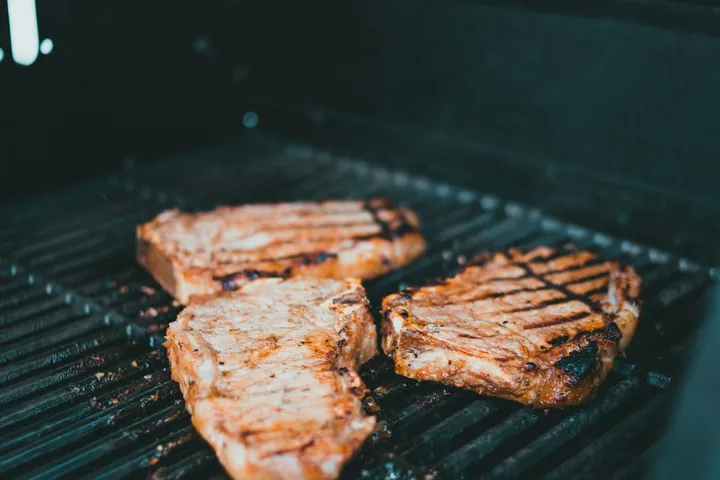
For a crust, take the tenderloins off at 135°F, set them on a plate, close the lid and turn the grill to 450°F. On a recteq, expect that to take about 8 minutes. Put them back over the hottest part of the grate for 2 minutes a side and pull at 140°F. An hour of smoke alone won’t give you that browning.
Pit tip: Have the plate, foil and instant-read ready before you start the sear. Two minutes a side goes by fast, and a tenderloin left on for an extra minute at 450°F can gain 8 to 10 degrees.
When to pull pork tenderloin
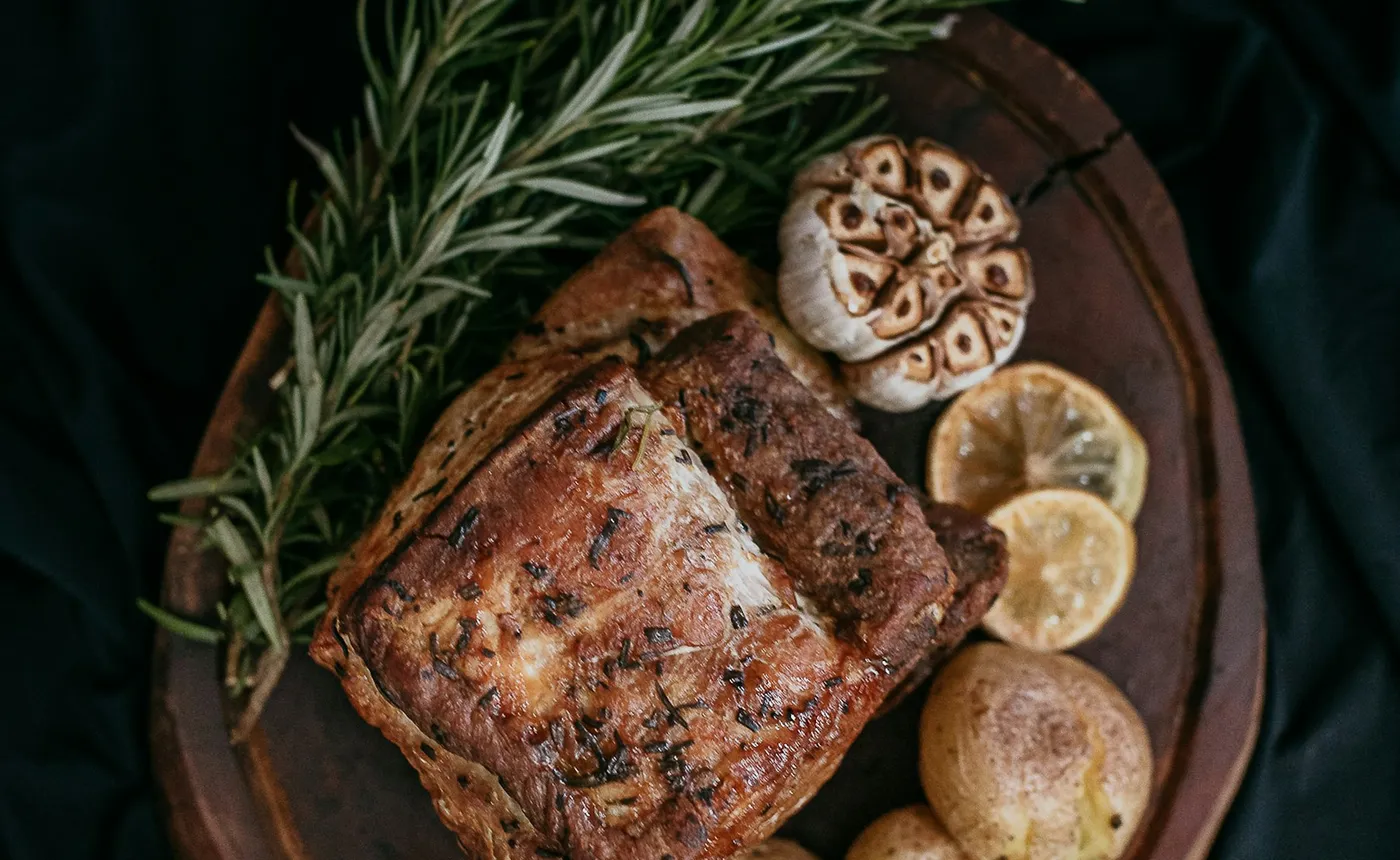
Pull at 140°F in the thickest part and tent loosely with foil for 10 minutes. Carryover takes it to 145°F, and the center will be pale pink with clear juices. That’s correct and safe.
| Pulled at |
After rest |
Center |
| 140°F |
145°F |
Pale pink, juicy |
| 145°F |
About 150°F |
Faint pink, still moist |
| 150°F |
About 155°F |
Beige, edges drying |
| 155°F and up |
160°F and up |
Dry throughout |
Before resting, check both ends with an instant-read. A leave-in probe reads one spot, and the thin end can run 10°F ahead even when tied.
Resting matters because a tenderloin has no fat to hide a mistake. Cut it straight off the grill and the juice ends up on the board instead of in the slices.
Weather and grill notes for a one-hour cook
On a cook this short, weather costs minutes rather than hours. Even on a 34°F evening, a recteq should hold 225°F without much trouble, and a 1.3 lb tenderloin needs about 80 minutes, roughly 10 minutes longer than in summer. Wind is harder on a pellet grill than cold, since it pulls heat out around the lid and makes the fan work harder, so turn the back of the grill toward it.
Cold weather bites hardest during the rest. On a freezing deck, a tented tenderloin can stall at 142°F and never reach 145°F. Rest it in the kitchen.
recteq grills tend to run close to even across the grate, though PelletGrillReviews found the far right of an RT-700, on the smokestack side, running 12 to 15°F hotter. Set the thick ends of the tenderloins toward the right so the whole length finishes together.
Serving and leftover pork tenderloin
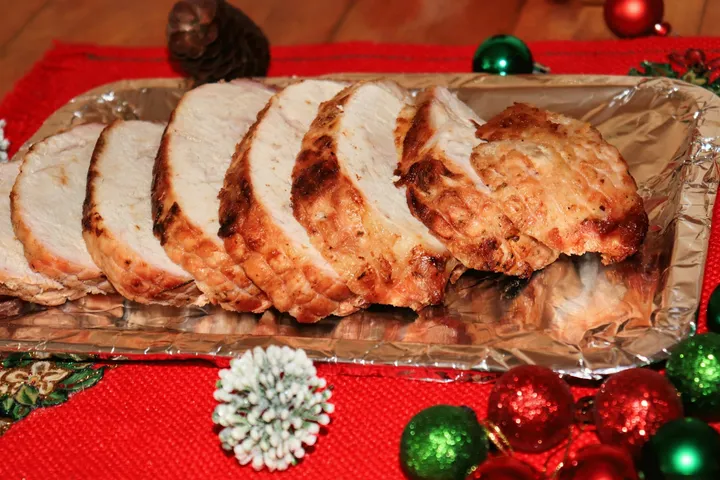
Slice into half inch medallions on a slight angle; a 1.25 lb tenderloin gives 12 to 14. It’s lean, so it wants a sauce: honey mustard, chimichurri, or the plate drippings with a pat of butter stirred in. A spoonful of apple chutney works too.
Smoked mac and cheese runs at the same 225°F if you start it 30 minutes earlier. For the same muscle group in a bigger roast, see pork loin. For a bone-in version of the same idea with a hard sear, try pork chops.
Leftovers keep four days. Slice them cold for sandwiches rather than reheating, because a reheated tenderloin is a dry one. If you must warm it, cover the slices with a tablespoon of stock and heat at 250°F until warm through, about 10 minutes.
Pellets and thermometer for tenderloin
An hour of smoke on a mild cut doesn’t leave room for anything stronger than a fruit wood, which is why I use straight apple. Cherry is the alternative. The best pellets for smoking guide covers which bags are real fruit wood.
Use a leave-in probe in the thick end and an instant-read to check both ends before you pull. The gap between 140°F and 150°F is roughly 8 minutes on a tenderloin, which is too tight to judge by eye. The thermometers I’d use are in best wireless meat thermometers.